Auto Locking Trucker's Hitch
( Auto Lock Trucker's Hitch | Improved Trucker's Hitch | Improved Lorry Driver's Hitch | Improved Wagoner's Hitch | Power Cinch | Purchase Loop | ABOK #2124 )
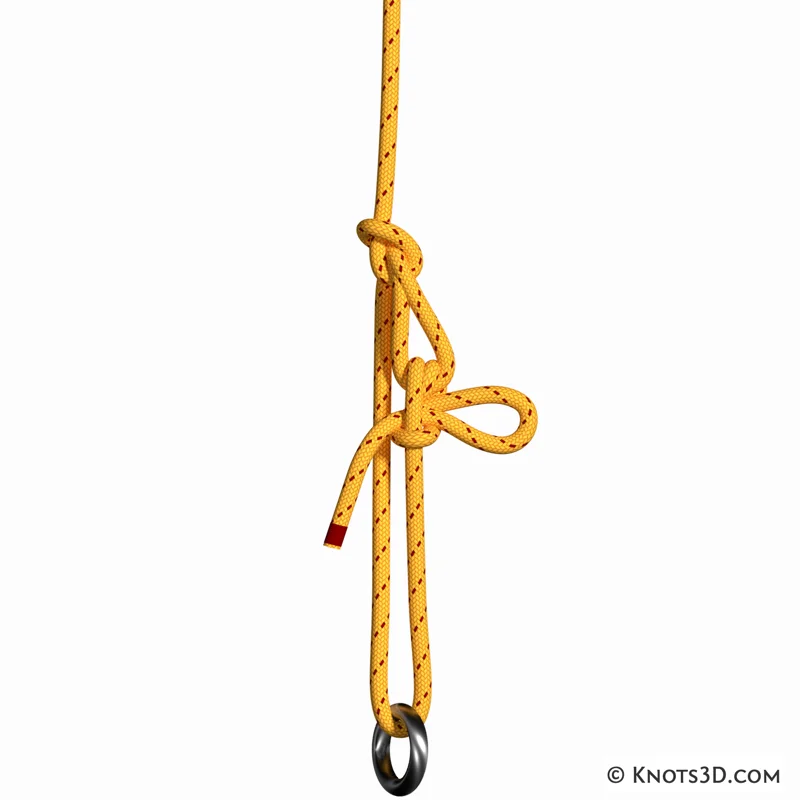
Usage
The Trucker’s Hitch is a compound knot widely used for securing loads on trucks, trailers, roof racks, and other conveyances. It forms a simple mechanical advantage system—similar to a block and tackle—by routing the rope through a loop and back to an anchor point, allowing the user to apply and maintain high tension with minimal effort.
The auto-locking variant enhances this design by adding a second pass of the working end through the loop before tensioning. This extra wrap increases friction and creates a temporary self-locking effect, allowing the line to hold tension automatically while adjustments are made. The result is a hitch that can be tightened or repositioned easily, often with one hand. Once the desired tension is reached, the standing part is typically secured with a slipped half hitch.
Warning ⚠️
Verify tying technique with a skilled instructor where knot failure could cause property damage, injury, or death.
History
Known by various names—including Purchase Loop, Wagoner’s Hitch, Lorry Driver’s Hitch, and Harvester’s Hitch—the Trucker’s Hitch is believed to have historical origins dating back centuries to when carters, hawkers, and agricultural workers transported goods with horse-drawn wagons. The knot’s mechanical advantage made it invaluable for securing loads, and its practical design has been passed down through generations of teamsters, haulers, and laborers. With the advent of motorized transport in the 20th century, the hitch became widely known as the 'Trucker’s Hitch,' reflecting its continued importance in the modern logistics and freight industries.
Also known as
- Auto Lock Trucker's Hitch
- Improved Trucker's Hitch
- Improved Lorry Driver's Hitch
- Improved Wagoner's Hitch
- Power Cinch
- Purchase Loop

ABOK
- 2124
Structure
The Auto-locking Trucker’s Hitch is a compound knot composed of several interconnected elements that create a simple mechanical advantage. In this variation, the loop portion is formed with a Slip Knot instead of a fixed loop such as an Alpine Butterfly Loop or Figure Eight Loop. The slip knot acts as a temporary, adjustable pulley point that can be created and untied quickly, making this version faster to tie and easier to release after use. When tension is applied, the working end is passed through the slip knot loop twice, producing additional friction that provides a self-locking effect. This auto-locking action allows the hitch to hold its tension momentarily without slipping, enabling the user to reposition or secure the load one-handed. Once properly tightened, the hitch is completed with one or more half hitches—often slipped for quick release—to lock the system securely. Because the slip knot loop is not fixed, this version is generally faster and more convenient.
Strength/Reliability
The Auto-Locking Trucker’s Hitch is a strong and dependable knot that provides excellent tensioning capability and reliable holding power when properly set. The auto-locking feature increases security by maintaining tension during tying and adjustment, reducing the likelihood of accidental slippage. As with all versions of the Trucker’s Hitch, repeated use can cause localized wear where the rope bends to form the loop—whether it is a Slip Knot or a fixed mid-line loop. This wear occurs primarily during the tightening phase, when the working end is pulled through the loop under high tension, creating a sawing or friction action that gradually damages the fibers. To prolong rope life and maintain safety, vary the position of the loop when tying and inspect for any signs of abrasion or damage before each use.
Note
All common variations of the trucker's hitch use a loop in the standing part of the rope and the anchor point as makeshift pulleys in order to theoretically obtain a 3 to 1 mechanical advantage while pulling on the working end. In real world use the mechanical advantage of the trucker's hitch is significantly less than the ideal case due to the effects of friction. One advantage of the friction within the trucker's hitch, compared to a hypothetical pulley-based system, is that it allows the hitch to be held taut with less force while the working end is secured.