Knowing the right caving knots is essential for safely exploring caverns, crevices, and deep underground shafts. Cavers descend and climb out on one rope, called single-rope technique (SRT). The sport, spelunking or potholing to some, takes explorers hundreds of feet underground. At the drop, a Figure Eight Follow Through ties the rope to anchor bolts, while an Alpine Butterfly or Double Bight Figure Eight rigs a Y-hang to share the load between two bolts. Farther down, the Alpine Butterfly can isolate a frayed rope section or steer the line clear of sharp edges or waterfalls. A Double Fisherman's Knot joins two ropes for longer pitches and forms short Prusik loops to grip the line. To climb back out, friction hitches like the Klemheist and Prusik bite the rope under a caver's weight and slide up when eased. A Munter Hitch offers a way down if a descender is lost. With life and limb depending on each of these essential caving knots, cavers rig carefully and check every connection by the light of a headlamp. See the best caving knots below.
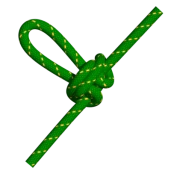 Alpine Butterfly
Secure loop in the middle of a rope.
Alpine Butterfly
Secure loop in the middle of a rope.
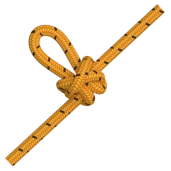 Alpine Butterfly (Hand Method)
Secure loop in the middle of a rope.
Alpine Butterfly (Hand Method)
Secure loop in the middle of a rope.
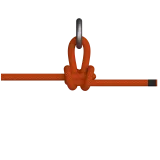 Alpine Butterfly (Rethreaded)
Alpine Butterfly tied with the rope end, as an end loop or around objects.
Alpine Butterfly (Rethreaded)
Alpine Butterfly tied with the rope end, as an end loop or around objects.
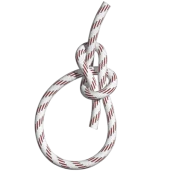 Bowline
Relatively secure fixed loop at the end of a rope.
Bowline
Relatively secure fixed loop at the end of a rope.
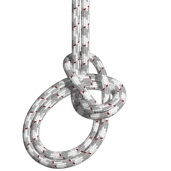 Bowline on a Bight
Secure double loop in the middle of a rope.
Bowline on a Bight
Secure double loop in the middle of a rope.
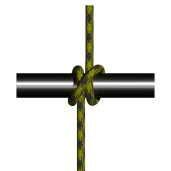 Clove Hitch
Secure a rope to a post or spar.
Clove Hitch
Secure a rope to a post or spar.
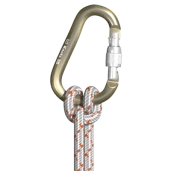 Clove Hitch (Two Loop)
Attach a rope to a carabiner without access to ends.
Clove Hitch (Two Loop)
Attach a rope to a carabiner without access to ends.
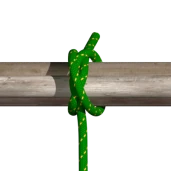 Constrictor Knot
Secure temporary or semi-permanent binding or clamp.
Constrictor Knot
Secure temporary or semi-permanent binding or clamp.
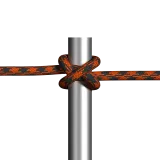 Constrictor in the Bight
Constrictor binding tied without the rope ends and slipped over a post.
Constrictor in the Bight
Constrictor binding tied without the rope ends and slipped over a post.
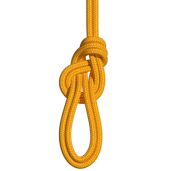 Double Bight Figure Eight
Two secure loops in the middle of a rope.
Double Bight Figure Eight
Two secure loops in the middle of a rope.
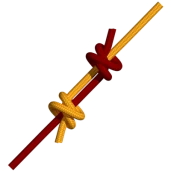 Double Fisherman's Knot
Securely join two ropes of similar size, often used in climbing.
Double Fisherman's Knot
Securely join two ropes of similar size, often used in climbing.
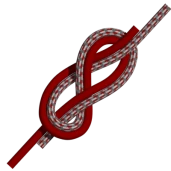 Figure Eight Bend
Securely joins two ropes, often used in climbing and rescue operations.
Figure Eight Bend
Securely joins two ropes, often used in climbing and rescue operations.
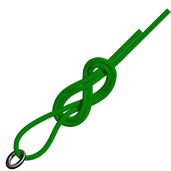 Figure Eight Follow Through
Secure loop knot used to tie a rope to a harness or anchor.
Figure Eight Follow Through
Secure loop knot used to tie a rope to a harness or anchor.
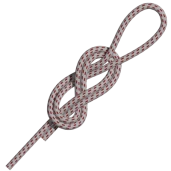 Figure Eight Loop
Secure, fixed loop at the end of a rope.
Figure Eight Loop
Secure, fixed loop at the end of a rope.
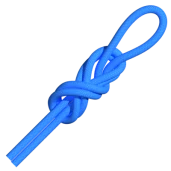 Figure Nine Loop
Secure, fixed loop at the end of a rope.
Figure Nine Loop
Secure, fixed loop at the end of a rope.
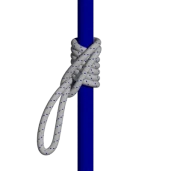 Klemheist
Directional friction hitch for ascending or descending on a rope.
Klemheist
Directional friction hitch for ascending or descending on a rope.
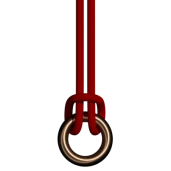 Lanyard Hitch
Temporarily attach cord to a post, ring, whistle or name tag.
Lanyard Hitch
Temporarily attach cord to a post, ring, whistle or name tag.
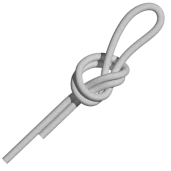 Loop Knot
Simple, secure loop for attaching gear or forming anchor points.
Loop Knot
Simple, secure loop for attaching gear or forming anchor points.
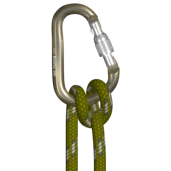 Munter Hitch
Friction hitch for controlled descent or belaying in climbing and rescue.
Munter Hitch
Friction hitch for controlled descent or belaying in climbing and rescue.
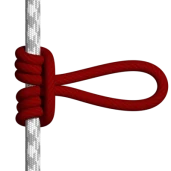 Prusik
Bi-directional friction hitch used for ascending or descending on a rope.
Prusik
Bi-directional friction hitch used for ascending or descending on a rope.
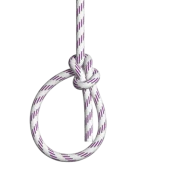 Snap Bowline
Quick to tie, Relatively secure fixed loop.
Snap Bowline
Quick to tie, Relatively secure fixed loop.
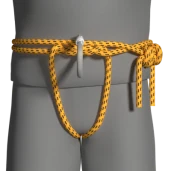 Swiss Seat
Basic rappel harness fashioned using rope or webbing.
Swiss Seat
Basic rappel harness fashioned using rope or webbing.
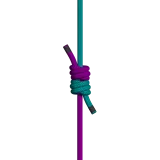 Triple Fisherman's Knot
Securely join two ropes or lines, especially thin, springy or slippery ones.
Triple Fisherman's Knot
Securely join two ropes or lines, especially thin, springy or slippery ones.
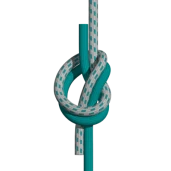 Water Knot
Join two ends of webbing.
Water Knot
Join two ends of webbing.
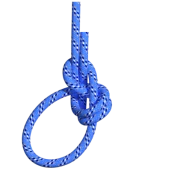 Yosemite Bowline
Secure Bowline variant for making a fixed loop.
Yosemite Bowline
Secure Bowline variant for making a fixed loop.
Warning