Get the app!


Details
TypeLoops
ABOK#1053
Also known as
Rethreaded Alpine ButterflyAlpine Butterfly End LoopAlpine Butterfly Follow Through
Description
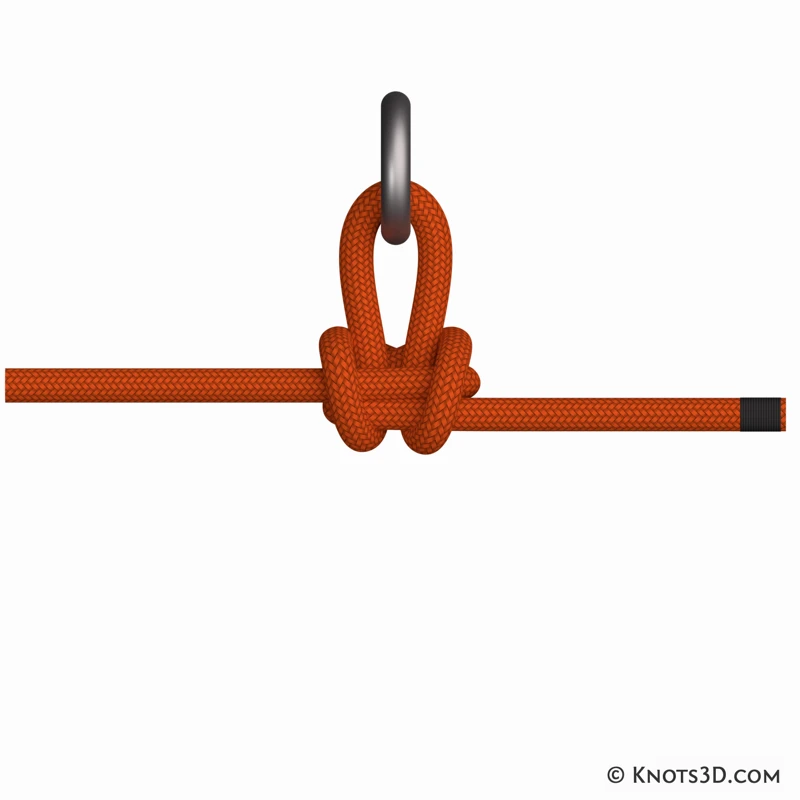
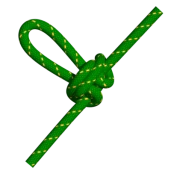
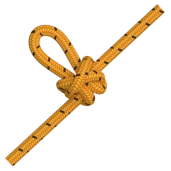
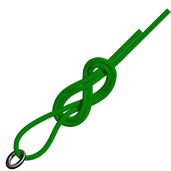
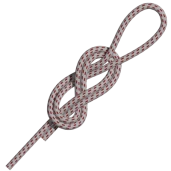
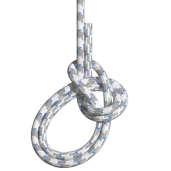
The Alpine Butterfly (Rethreaded) is the Alpine Butterfly tied with the end of the rope. It makes a fixed loop in the end of a rope, or a loop formed through a ring, bolt or other closed anchor. A loose overhand knot is tied first, the end is passed through or around the object, and the end then completes the knot. The finished knot is the same as one tied on the bight, with the end taking the place of the second standing part. An end loop that does not need to pass through anything can therefore also be made by tying an ordinary Alpine Butterfly near the end of the rope.In caving it is used to rig a rope through intermediate anchors without a carabiner or maillon when the rigging will be left in place. Tied this way at several anchors along one rope, it saves carabiners, removes any chance of a carabiner being loaded the wrong way, and is less open to interference while the anchors are unattended. If plenty of rope is pulled through before the knot is finished, the knot can sit partway along the rope and be loaded from both sides like any Alpine Butterfly.It does the same job as the Figure Eight Follow Through but takes more care to tie correctly, so check the finished knot before loading it. Loaded as a loop at the end of the rope, it can jam after a heavy load and be hard to untie. Some instructors prefer a Figure Eight Loop or a Bowline at the end of a rope and keep the butterfly for anchors partway along it.
Structure
The Alpine Butterfly (Rethreaded) has the same structure as the Alpine Butterfly tied on the bight. Only the tying method differs. In the finished knot the standing part and the end play the roles of the two standing parts of the mid-line knot, and both legs of the loop play the same roles as they do there. The standing part and the end leave the knot on the same side, parallel and adjacent.The knot is built from two interlocked overhand knots, the first tied in the standing part and the second tied with the end after it has passed through or around the object. It can be dressed in a closed form, by pulling the standing part and the end together away from the anchor, or in an open form, by pulling them in opposite directions. Either form should be dressed firm before it is loaded. Loaded as an end loop, with only one strand under load, the knot spreads the load through its parts differently from the mid-line knot, and a heavy load can pull it into a tighter, jamming form. The butterfly is not perfectly symmetrical, so the knot behaves slightly differently depending on which of the two strands leaving it is loaded and which is left as the tail.
Strength/Reliability
In tests reported by David M. Delaney in thin braided nylon cord stretched by about 25%, the Butterfly Loop loaded as an end loop showed no tendency to slip or collapse. Both its closed and open forms were prone to jamming, the open form less so. Under load, some slippage of the loop leg that leads to the unloaded side can tighten the collar of the knot and make it hard to loosen.When the knot is tied partway along a rope and loaded from both sides, it is an ordinary Alpine Butterfly and behaves as one.
Note
Start with a loose overhand knot in the standing part, leaving enough rope beyond it to go around the object and finish the knot. Pass the end through the ring or around the object, then use it to tie a second overhand knot that interlocks with the first, finishing with the end alongside the standing part.Keep the second overhand knot above the first and bind as little of the first as possible. A simple pull will then do most of the dressing. The precaution matters most in stiff rope.
Warning
Verify tying technique with a skilled instructor where knot failure could cause property damage, injury, or death.
Common Uses
- tie a rope directly to a ring, bolt or other closed anchor without a carabiner.
- make a fixed loop in the end of a rope for clipping to an anchor.
- attach one rope to several anchor points in turn without using carabiners.
- rig a caving rope through intermediate anchors when the rigging will stay in place.
- remove the risk of a carabiner being loaded the wrong way at an unattended anchor.
- tie a jib sheet through the clew of a sail without a shackle.
Found in


