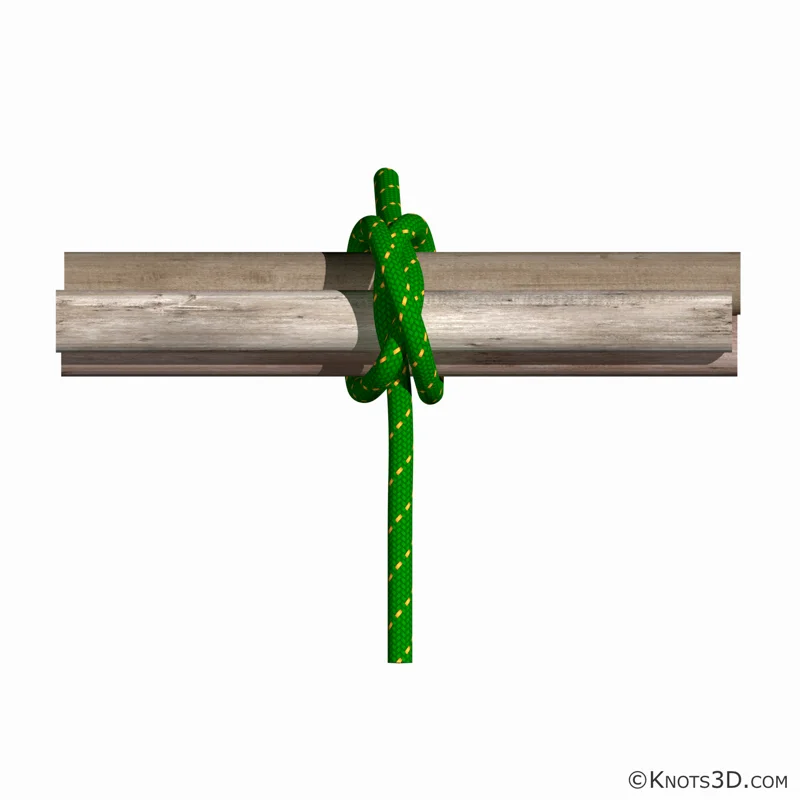


Description
The Constrictor Knot is one of the most effective binding knots. Simple and secure, it is a harsh knot that can be difficult or impossible to untie once tightened. The Constrictor Knot is appropriate for situations where secure temporary or semi-permanent binding is needed. Made with small line it is especially effective, as the binding force is concentrated over a smaller area. When tying over soft material such as the neck of a bag, hard stiff cord is more effective. When tying over hard surfaces, soft stretchy line is preferred. The Constrictor Knot's severe bite (which makes it so effective) can damage or disfigure items it is tied around. Constrictor Knots can be used for temporarily binding the fibers of a rope (or strand ends) together while splicing, or when cutting to length and before properly whipping the ends. Constrictor Knots can also be quite effective as improvised hose clamps or cable ties.
Structure
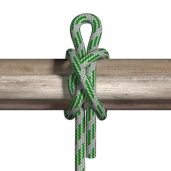
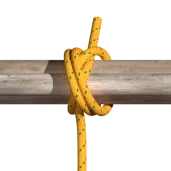
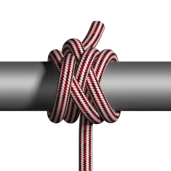
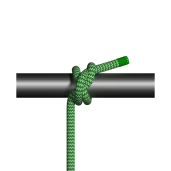
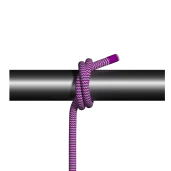
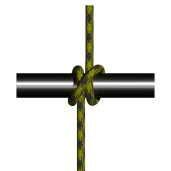
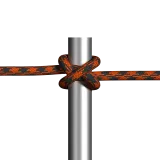
The Constrictor Knot is made similarly to a Clove Hitch but with one end passed under the other, forming an overhand knot under a riding turn. The Double Constrictor Knot is an even more robust variation that features two riding turns.
Strength/Reliability
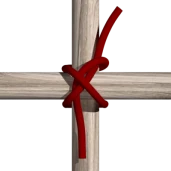
The Constrictor and Double Constrictor are both extremely secure when tied tightly around convex objects with cord scaled for the task at hand. If binding around a not fully convex, or square-edged object, arrange the knot so the overhand knot portion is stretched across a convex portion, or a corner, with the riding turn squarely on top of it. In situations where the object leaves gaps under the knot and there are no corners, it is possible to finish the constrictor knot off with an additional Overhand Knot, in the fashion of a Square Knot (Reef Knot), to help stabilize it. Those recommendations aside, Constrictor Knots do function best on fully convex objects.
Common Uses
- create a permanent binding that won't come undone once tightened.
- clamp a hose onto a fitting as a temporary hose clamp.
- temporarily bind the end of a rope to prevent fraying.
- bundle cables, cords, or wires together.
- close the neck of a bag or sack tightly.
- hold two pieces of wood together while glue dries.
- secure a wrapping or covering around a handle or pole.
- bundle rebar, pipes, or tools together for transport or storage.
- serve as a semi-permanent zip-tie binding on round objects.
- tie a bundle of sticks or firewood.
- bind tightly around a cylindrical object like a pipe, pole, or dowel.
- create a binding that gets tighter the harder you pull.
- cinch a bundle of sticks or pipes tight like a zip tie.
Found in


