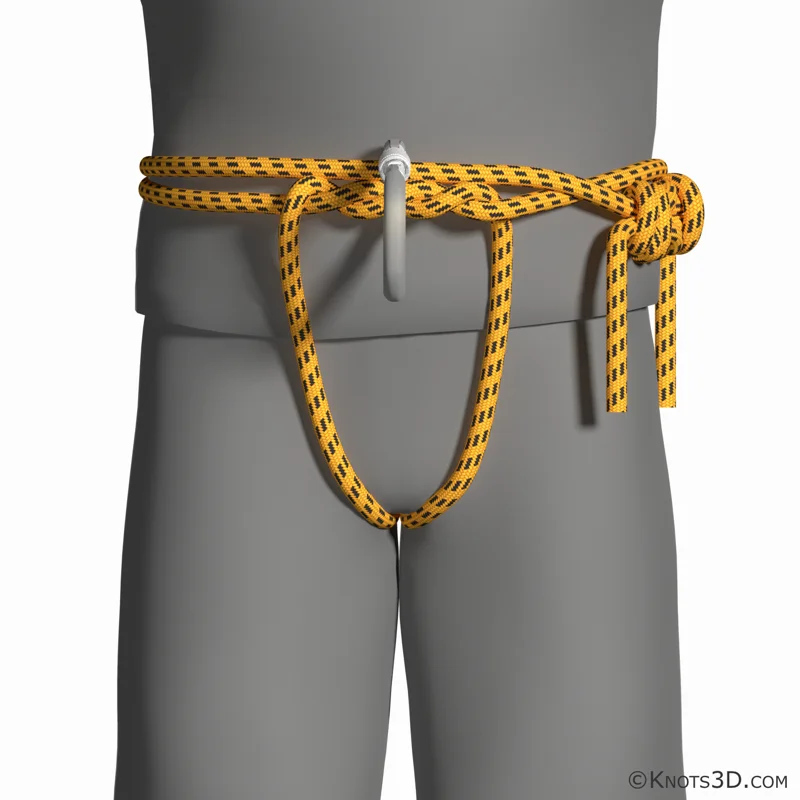


Description
The Swiss Seat is a basic yet effective rappel harness that can be easily fashioned using a rope or webbing. It is good for those who need to improvise a harness in an emergency situation or for those that do not want to invest in a commercially made harness. The Swiss Seat can be tied in various ways, including both left-handed and right-handed configurations. The version featured here in Knots 3D is the specific variant taught in the United States Army and Marine Corps.
History
The invention of the climbing harness has been attributed to Jeanne Immink, a Dutch climber in the late nineteenth century.
The sit or seat harness was invented in the 1960s by Yosemite climbers. The first innovation was the Swami Belt, which was multiple loops of webbing around the waist. Then quickly came the Swami Seat, a sit harness tied from webbing revealed to the climbing world thru an article in Summit Magazine in the mid-60s, which included leg loops and an integrated waist loop. Once the seat/sit harness came to be, suppliers of climbing gear started making them with stitching replacing the knots.
Warning
Verify tying technique with a skilled instructor where knot failure could cause property damage, injury, or death.
Common Uses
- make an emergency harness from rope for descending a cliff or building.
- create a simple sitting harness for rappelling without gear.
- rig an improvised harness for lowering or hoisting a person in rescue.
- tie a field-expedient harness for military training.
- provide a basic safety harness when no manufactured harness is available.
- sit a person in an improvised rope seat or chair harness for a controlled lower.
Found in


