Get the app!


Details
TypeBends
ABOK#294
Also known as
Grapevine KnotDouble Englishman's KnotDouble English KnotTilley Hat KnotNecklace Knot
Description
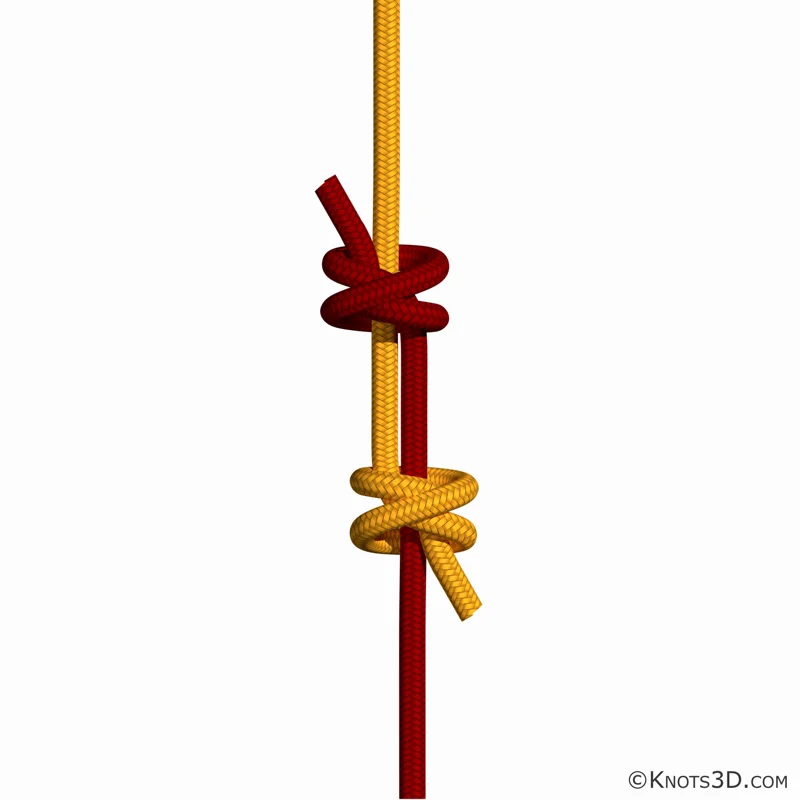
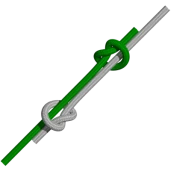
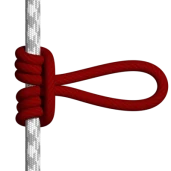
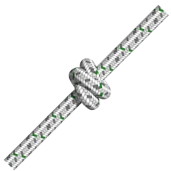
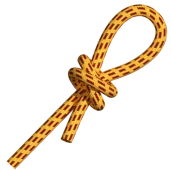
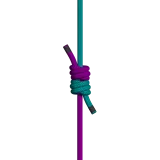
The Double Fisherman's knot or Grapevine Knot is a bend used to join two lengths of rope. This knot and the Triple Fisherman's Knot are the variations used most often in climbing, arboriculture, and search and rescue. A primary use of this knot is to form high strength loops of cord, called a Prusik Loop, for connecting pieces of a climber's protection system. The Double Fisherman's knot can also be used to join the ends of a necklace cord. The necklace length can then be adjusted by sliding the knots closer or farther apart. The Tilley Hat also uses this approach for adjusting the length of the wind cord.
Structure
The knot is formed by tying a Double Overhand Knot, in its strangle knot form, with each end around the opposite line's standing part.
Strength/Reliability
The Double Fisherman's Knot can be made more secure by adding an extra turn to each end, making it into a Triple Fisherman's Knot.
Warning
Verify tying technique with a skilled instructor where knot failure could cause property damage, injury, or death.
Common Uses
- join two climbing ropes together securely.
- make an adjustable necklace or bracelet.
- tie a cord into a closed loop for use as a sling or grip.
- make an adjustable bikini or swimsuit string.
- connect two ropes for a long rappel or lowering.
- make an adjustable wind cord or hat chin strap.
- connect two elastic cords (bungee cord).
- join two lengths of cord to make a longer piece.
- make a Prusik loop from a length of accessory cord.
- tie two ropes of the same thickness together with a knot that won't slip.
- join two ropes with a knot that won't come undone.
Found in


