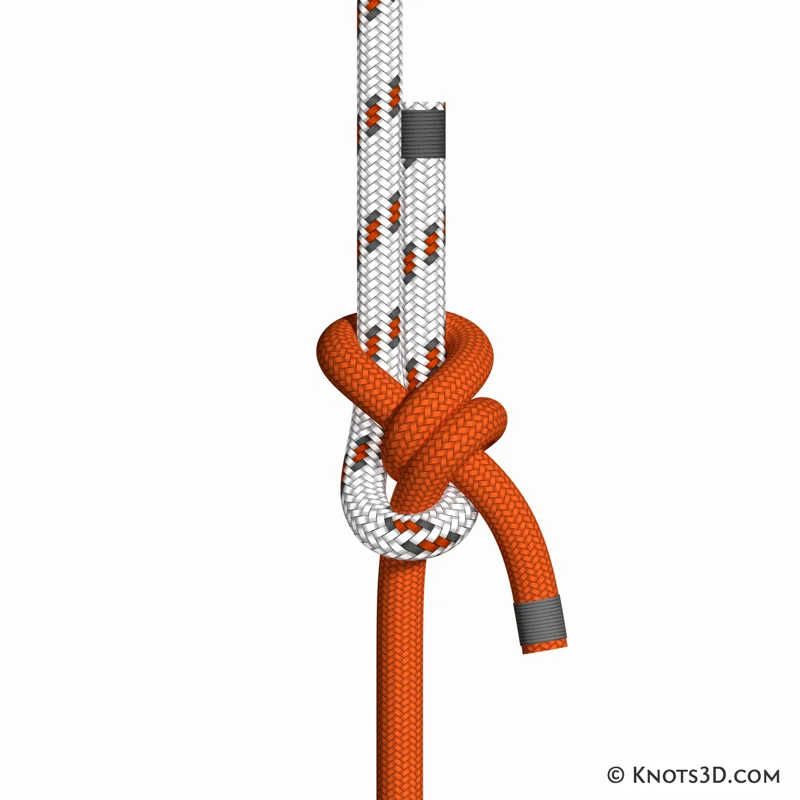


Description
The Sansome Bend is used to join two ropes together, particularly when working with slippery, non-compliant cordage such as bungee cord or modern synthetic materials. It addresses the common complaint about the Sheet Bend's tendency to work loose by incorporating an extra locking turn at the start of the knot. This bend is well suited for applications where the standard Sheet Bend proves unreliable—elastic cords, stiff materials, or situations where the knot may be subject to intermittent loading or vibration.
History
The Sansome Bend originated in the 19th-century weaving trade, a period when textile mills relied heavily on knots like the Sheet Bend (Weaver's Knot) for joining threads and yarns. Weavers often developed unique variations to handle the specific challenges of different materials. While the Sansome Bend is little known and somewhat obscure, John Shaw's A Directory of Knots sheds light on its history. Englishman Malcolm Hughes learned the knot from his grandfather, Philip Sansome, who used it specifically for joining lengths of elastic as a young man in the weaving trade at Loughborough, Leicester, circa 1845.
Structure
The Sansome Bend is described as a development of the Sheet Bend, distinguished by an extra locking turn cleverly inserted at the start of the knot. This additional turn provides extra friction and grip that counters the tendency of the Sheet Bend to work loose, particularly in slippery or stiff materials. Like the Sheet Bend, the knot begins with forming a bight in one rope, with the second rope passing through and wrapping around the bight. The specific placement and method of the additional locking turn creates a more secure grip than the standard Sheet Bend. As with the Sheet Bend, the two working (short) ends should emerge on the same side of the knot.
Strength/Reliability
The Sansome Bend's primary advantage over the standard Sheet Bend is its enhanced security with difficult materials. The extra locking turn provides additional friction that helps prevent the knot from working loose under cyclic loading or when tied in materials that don't hold knots well. It is recommended for joining bungee cords, shock cord, and other elastic or slippery synthetic cordage where traditional bends may prove unreliable. As with any bend, it should be properly inspected, dressed and set before use.
Warning
Verify tying technique with a skilled instructor where knot failure could cause property damage, injury, or death.
Related

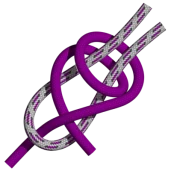
Common Uses
- join two ropes of similar thickness securely.
- connect two lines with a compact, non-jamming bend.
- join slippery, elastic or synthetic ropes.