Get the app!


Details
TypeHitches
Also known as
MichoacánMeechMichoacan Friction HitchMichoacan Climbing HitchMartin Hitch
Description
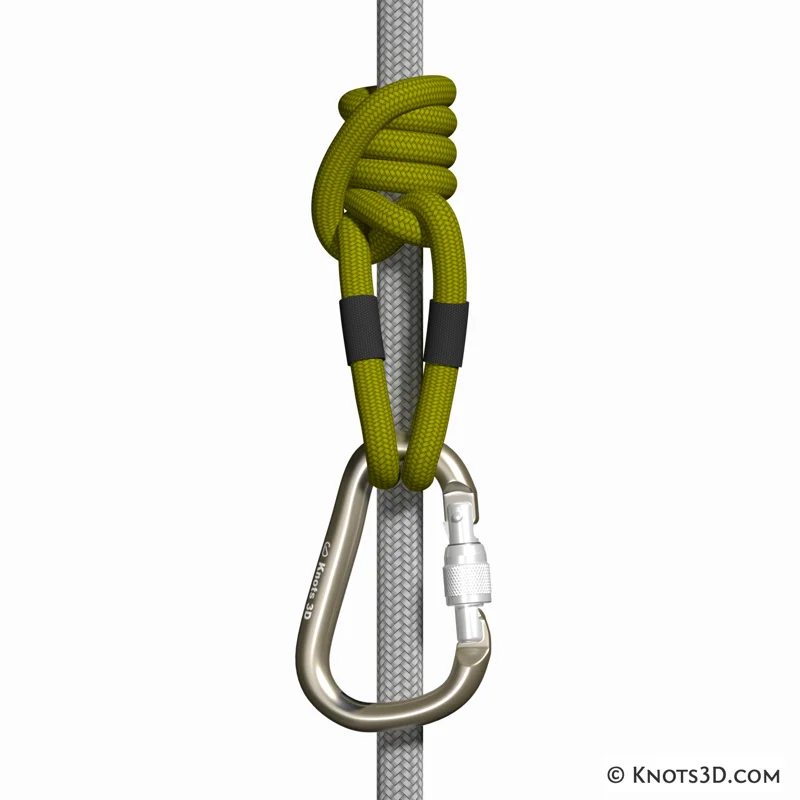
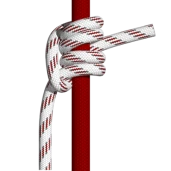
The Michoacan is a friction hitch used by arborists as a primary climbing hitch. It provides firm, dependable grip on the climbing line, making it well suited for ascent, controlled descent, and work positioning, though it can be a bit harder to break free after being heavily loaded compared to some other hitches. Typical configurations use an eye‑to‑eye hitch cord on a slightly larger climbing rope, and the hitch should always be tested and adjusted (wrap count, cord diameter) for the specific rope combination and conditions before use. Over time it has become a popular friction hitch among professional arborists and recreational climbers, often referred to by the nickname “Meech”.
History
The Michoacan hitch was developed by arborist Martín Morales, originally from the Mexican state of Michoacán. While the exact date of its initial invention remains undocumented, the knot was featured in print as early as April 2005 in an arborist article by Mark Adams. In that original publication, the hitch was introduced under the name 'Martin' (after its inventor) because other climbers reportedly had difficulty pronouncing 'Michoacán'. Adams later spoke directly with Morales, who requested that the knot be officially named the 'Michoacán' in honor of his home state.
Structure
The Michoacan is a directional slide‑and‑grip hitch tied with a separate hitch cord rather than a closed Prusik loop. The Michoacan is typically tied with between 4 and 6 wraps around the standing climbing line from bottom to top. Dressed correctly, the wraps stack neatly, the hitch sits relatively short and compact under load, and it advances and grabs smoothly when used with compatible rope and cord diameters.
Strength/Reliability
As a friction hitch, the Michoacan's effectiveness depends on rope and cord diameter, material, and number of wraps, but when properly tuned it offers a strong, very reliable grip on the host rope. A minimum of four wraps should be used but more may be required. Frequent inspection of the rope for wear is essential.
Warning
Verify tying technique with a skilled instructor where knot failure could cause property damage, injury, or death.
Common Uses
- grip a rope for ascending or repositioning while tree climbing.
- create a one-directional friction hitch for arborist work.
- back up a climbing system with a secondary grip on the rope.
Found in
