Get the app!


Details
TypeHitches
ABOK#1673
Also known as
Lark's HeadLark's FootReverse Double Half HitchDouble StitchGirth HitchDeadeye Hitch
Description
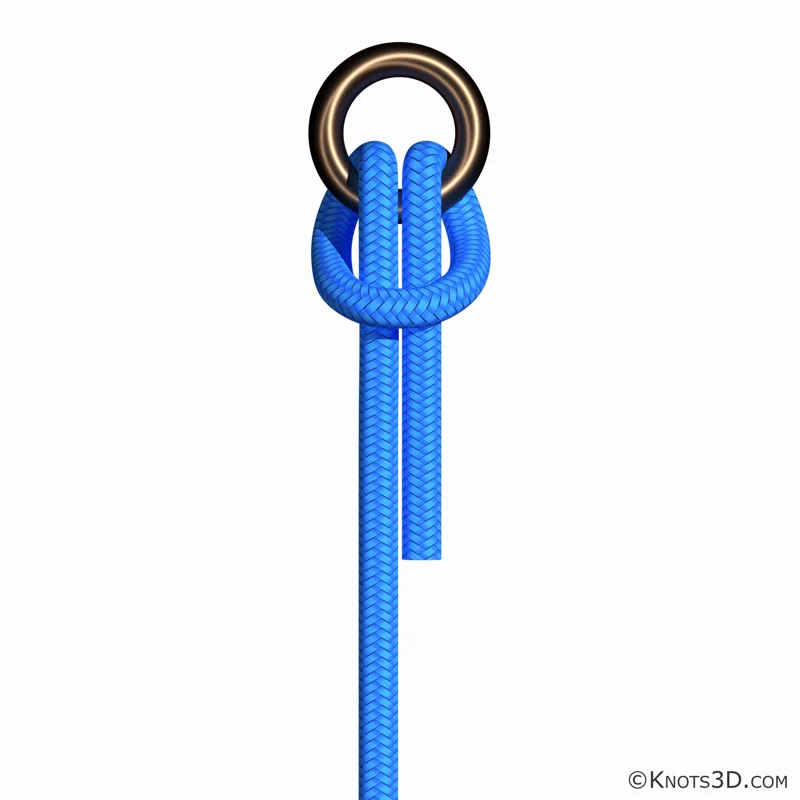
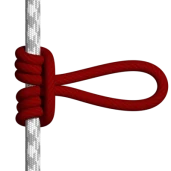
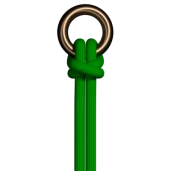
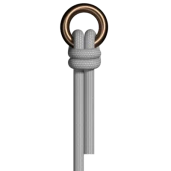
The Cow Hitch, also called the Lark's Head, is a simple knot used to secure an animal to a pole. It is also used in decorative knotting, such as macrame, tatting (Double Stitch), and paracord projects.
History
The Cow Hitch is a simple yet effective knotted structure, recognized since at least the first century when the Greek physician Heraklas described it in his monograph on surgical knots and slings. Known by various names, this knot has been utilized both on land and at sea. The common alternative name, 'Lark's Head', is attributed to Tom Bowling (a pseudonym) in the 1866 work 'The Book of Knots', which is believed to have been adapted from a French manuscript. 'Lark's Head' is a literal translation of the French name for the knot, 'tête d'alouette.'
Structure
When completed, the Cow Hitch is identical in structure to the Lanyard Hitch. The difference is in how they are tied; the Cow Hitch is more practical with long rope where only one end is available, e.g. when the other end is tied to an animal. The Lanyard Hitch, on the other hand, requires threading the entire rope through the formed bight which makes it impractical for use with long rope.
Strength/Reliability
The Cow Hitch can fail/slip if equal tension is not applied to both standing parts of the rope. To address this issue, the Pedigree Cow Hitch can be used instead, as it provides security and prevents slippage even if only one strand is loaded.
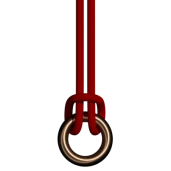
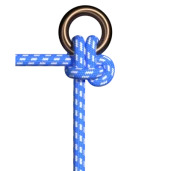
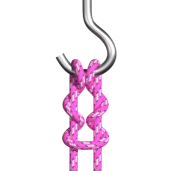
Common Uses
- attach a loop of cord to a ring, hook, or post quickly.
- connect a lanyard loop to an electronic device or tool.
- hang an item from a hook or rail with a simple hitch.
- start a macrame or paracord craft project by attaching cord to a rod.
- attach a luggage tag or key ring to a strap or handle.
- hang a ring on a necklace cord.
- tie an animal's lead rope to a fence post or pole.
- attach a line to a surface marker buoy clip or dive equipment.
- tie a curtain or theatrical drop to a batten pipe.
- start a macrame wall hanging by attaching cords to a dowel.
- girth hitch a sling or runner around a tree or post for climbing.
- secure gear to the outside of a backpack or pack frame.
- attach a rope to a post, ring, or shackle quickly.
- make a net by joining cord at intersections.
- attach a pendant or charm to a cord to make a necklace.
Found in
