Description
The Three-way Sheet Bend is a specialized variation if the classic
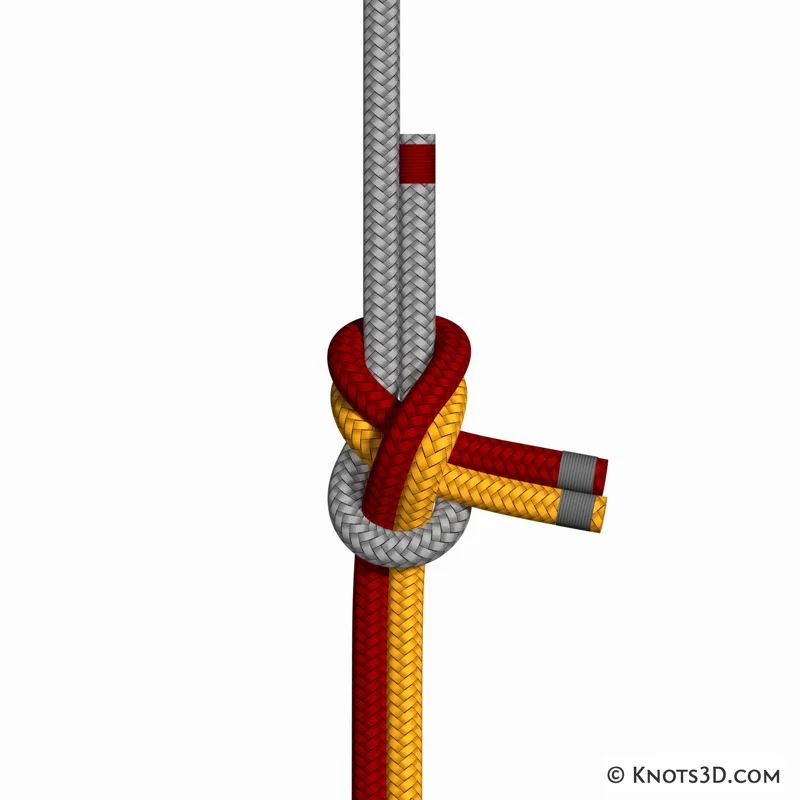
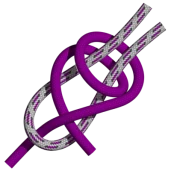
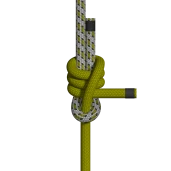
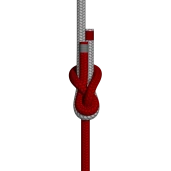
Sheet Bend designed to join three ropes together (rather than the standard two), making it useful for complex rigging setups where multiple lines need to converge at a single point. The thickest rope forms a simple bight, while the two thinner ropes are each wrapped around the bight and tucked under themselves in the characteristic Sheet Bend configuration. This knot is particularly useful in marine rigging, camping, and utility applications where multiple lines must converge for complex mooring systems, multi-point shelter guylines, or intricate load-securing setups. While more complex than the standard two-rope Sheet Bend, it maintains the family's characteristic reliability and ease of untying after loading.
History
The Three Way Sheet Bend, though not explicitly documented in The Ashley Book of Knots, represents a practical evolution of the
Sheet Bend (ABOK #1431) for multi-rope applications. Its utility was recognized by knot authorities in the 20th century, including sailor, author and illustrator Frank Rosenow.
In his 1944 book Seagoing Knots, Rosenow recounted a memorable demonstration of the knot's reliability in the Ionian Sea. While at the town quay of Gaios on Antipaxos, an Island in Greece, he observed Colonel Bertram Bloomer, a retired officer of the Royal Engineers, expertly secure the Falmouth Quay punt Twilight in an awkward berth between two vessels. When the Greek excursion boat captain, Spiro, passed a spring line from his Blue Grotto Taxi, Colonel Bloomer 'quickly made a bridle by attaching two lines of his own to it' using the Three Way Sheet Bend. Rosenow admitted he had 'held out for years against the sheet bend because it looks too simple to be reliable,' but the colonel's demonstration—and the knot's performance through a nighttime squall without disturbing the Twilight—proved the Three Way Sheet Bend's practical worth. Rosenow illustrated the Blue Grotto Taxi boat secured by the Three Way Sheet Bend in Seagoing Knots (1990), providing visual documentation of this real-world application.
Structure
The Three-way Sheet Bend is a variant of the standard
Sheet Bend but joins three ropes at a common point rather than two. The thickest rope forms a simple bight, while the two thinner ropes are each wrapped around the bight and tucked under themselves in the characteristic Sheet Bend configuration. It works equally well with ropes of the same size.
Strength/Reliability
The Three-way Sheet Bend is a secure way to join three ropes.