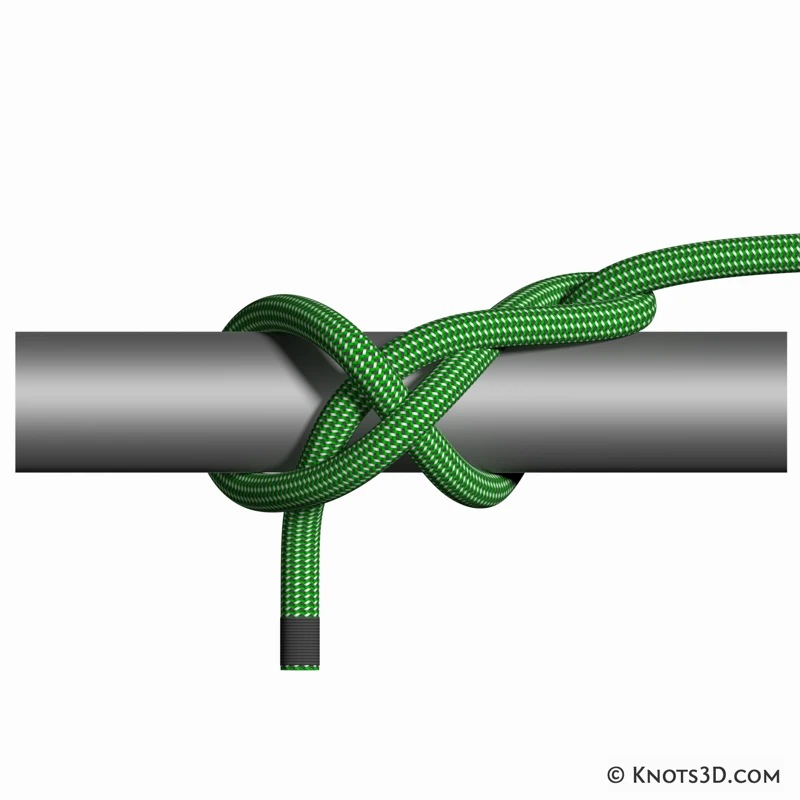


Description
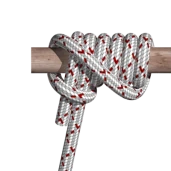
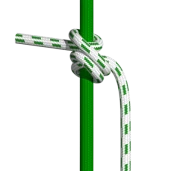
The Clinging Clara Hitch is the second of the two 'Clara' forms recorded under that name. It is tied as a Clara Hitch, but the working end is finally tucked beneath two knot parts rather than one. The extra tuck makes it grip harder on the thicker rope, and it is the more secure of the pair when the pull runs along the line's length. As with the plain Clara Hitch, further turns can be added when the hitch is made onto a smooth spar rather than a rope.
History
This hitch belongs to the Clara family published by Dr. Harry Asher in 1986. Various well-regarded sources disagree on its name. Asher himself wrote only of 'a Clara or a Queen Clara' and never used the word 'clinging'. The earliest known use of Clinging Clara is Geoffrey Budworth's Ultimate Encyclopedia of Knots of 1999, where it names the plain Clara Hitch rather than this form. John Shaw's Directory of Knots of 2003 heads its Clara entry 'Clinging Clara Hitch' and notes that it has two distinct forms, of which this is the second, while Nic Compton's Knot Bible of 2013 treats the Clinging Clara as the base of the family. Knots 3D follows Asher and Shaw. The plain form is the Clara Hitch, and the second tucked form is the Clinging Clara Hitch.
Structure
The Clinging Clara Hitch is begun exactly as the Clara Hitch, with two turns round the thicker rope and the working end then wrapped round its own standing part. It differs only in the finish. The end is tucked beneath two knot parts rather than one, which locks the hitch more firmly against a lengthwise pull.
Strength/Reliability
The additional tuck makes this the more secure of the two Clara forms, holding better on a slippery or heavily loaded line. It grips by friction and, like the rest of the family, holds only while tension on the standing part is maintained. Additional turns increase the grip and are needed if the hitch is made onto a spar rather than another rope.
Warning
Verify tying technique with a skilled instructor where knot failure could cause property damage, injury, or death.
Common Uses
- join a thin line to a much thicker rope where extra security matters.
- attach a light line to a hawser for a pull along its length.
- add extra pull to a line by hitching a smaller rope onto a larger one.
- grip a rope that is slippery or under a steady lengthwise load.
Found in
